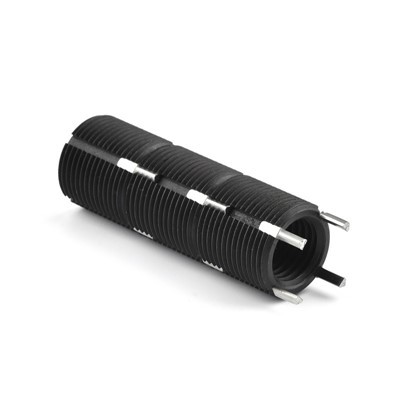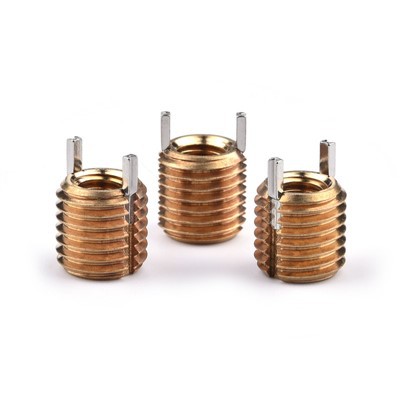


Metric Key Lock Thread Insert
Features
Keensert/Keysert Key Locking Insert Features
- Can be used in virtually any material including aluminum, cast iron, steel, & plastics
- Positive mechanical lock against rotation
- High strength and flexibility provides maximum pull out strength
- Easy installation and removal, can be installed using standard drills and taps. However, Keensert installation kits are also Available if needed
- No prewinder tool required
- Impossible to cross-thread during installation
- No tang break off needed
Specification
Keensert/Keysert Key Locking Insert Materials & Finishes
- Materials: Carbon Steel, Stainless Steel, Bronze, Nitronic 60
- Finishes: Silver Plate, Cadmium Plate, Dry Film Lubricant
Keensert/Keysert Key Locking Insert Thread Types
Keensert Key-Locking Inserts are available in standard & screw lock forms
- Metric
- UNC
- UNF
Keensert/Keysert Key Locking Insert Types
- Miniature
- Lightweight (Thin wall)
- Heavy Duty
- Extra Heavy Duty
- Solid
Key Lock Thread Insert Selection Recommendation

Stainless Steel Keenserts
The commonly used material is SUS303 stainless steel, which offers excellent corrosion resistance, high-temperature resistance, and oxidation resistance. It is suitable for harsh environments such as humid, acidic/alkaline, or high-temperature conditions. These inserts provide a long service life and adapt well to complex environments. No additional anti-rust treatment is required after installation. They offer high stability and are suitable for long-term, high-load operating conditions. The cost is slightly higher, compared with carbon steel, they have better toughness but slightly lower hardness.

Carbon Steel Keenserts
Typically made from C1215 carbon steel, these inserts are available with various anti-corrosion surface treatments such as zinc plating, nickel plating, phosphating, black oxide, and electrophoretic coating. They offer high strength and hardness, making them suitable for general metal structures. The cost is relatively low, and their high strength makes them ideal for thread reinforcement in softer base materials such as aluminum and magnesium alloys. With multiple surface treatment options, they can meet different industrial requirements. However, their corrosion resistance is relatively limited, and service life is more significantly affected by environmental conditions.

Locking-Type Keenserts
Based on standard slotted inserts with pins, this type incorporates an additional locking feature. Common designs include an eccentric or deformed section in the internal thread, which applies continuous locking force to the bolt. It offers excellent anti-loosening performance and can be repeatedly installed and removed with minimal loss of locking effectiveness. The compact structure minimizes damage to the parent material. However, the cost is higher than standard slotted inserts, insertion resistance is greater, and careful torque control is required during installation.
Vibration Testing Equipment Appilcation Case

Challenge
Threaded holes machined directly into aluminum plates were exposed to continuous high-frequency vibration and repeated assembly cycles.
After extended operation, some fastening points showed early thread wear, requiring additional torque checks to maintain preload stability.

Solution
Key-locking thread inserts were installed at critical fastening locations during scheduled maintenance.
The inserts were fitted using standard drilling and tapping tools and mechanically locked into the parent material with keys.
A minor adjustment to counterbore depth was made during initial installation, with no impact on assembly time or machine operation.

Operating Conditions
Vibration frequency range: 5–2,000 Hz
Typical test duration: 6–8 hours per cycle
Accumulated operating time: 1,000+ hours
Results
- No insert rotation or loosening under continuous vibration
- Stable bolt preload after repeated installation and removal
- Thread-related maintenance frequency reduced by approximately 40%
Outcome
The customer achieved long-term thread stability and reduced maintenance effort in a vibration-intensive testing environment, improving overall equipment reliability.
Metric Key Lock Thread Insert
2 KEY LOCKS Types
KNCM, KNM, KNHM
Material
Stainless steel 1.4305 / AISI 303
Extraction force [N]
Shear engagement „A [mm2 ]" x ultimate shear strength of parent material „Rm [N/mm2 ]"
KEENSERTS with UNC or UNF threads, MS and NAS specification are available upon request.

Type KNCM, small series
|
Thread size d1 5H |
Thread size D 4h |
Order reference |
L ± 0,25 |
d2
|
d3 6H |
d4 |
T min. |
A [mm²] |
|
M3 |
M5*0.80 |
KNCM3*0.5 |
4.25 |
4.4 |
M5*0.80 |
5.1 |
6.0 |
33.1 |
|
M4 |
M6*0.75 |
KNCM4*0.7 |
5.25 |
5.5 |
M6*0.75 |
6.1 |
7.5 |
58.4 |

Type KNM, standard series
|
Thread size d1 5H |
Thread size D 4h |
Order reference |
L ± 0,3 |
d2
|
d3 6H |
d4 |
T min. |
A [mm²] |
|
M5 |
M8*1.25 |
KNM5*0.8 |
8.0 |
6.9 |
M8*1.25 |
8.25 |
10.5 |
104.9 |
|
M6 |
M10*1.25 |
KNM6*1 |
10.0 |
8.8 |
M10*1.25 |
10.25 |
13.0 |
177.7 |

Type KNHM, heavy-duty series
|
Thread size d1 5H |
Thread size D 4h |
Order reference |
L ± 0,3 |
d2
|
d3 6H |
d4 |
T min. |
A [mm²] |
|
M5 |
M10*1.25 |
KNHM5*0.8 |
10.0 |
8.8 |
M10*1.25 |
10.25 |
13.0 |
177.7 |
|
M6 |
M12*1.25 |
KNHM6*1 |
12.0 |
10.8 |
M12*1.25 |
12.25 |
15.5 |
266.7 |

2 KEY LOCKS, SELF-LOCKING
Types KNML, KNHML
The self-locking feature is designed similarly to MIL-N-25027 and supplied with MIL-L8937 lubrication.
Material
Stainless steel 1.4305 / AISI 303 with surface treatment
Extraction force [N]
Shear engagement „A [mm2 ]" x ultimate shear strength of parent material „Rm [N/mm2 ]"
KEENSERTS with UNC- or UNF threads, MS and NAS specification are available upon request.

Type KNML, standard series
|
Thread size d1 5H |
Thread size D 4h |
Order reference |
L ± 0,3 |
L1* |
d2
|
d3 6H |
d4 |
T min. |
A [mm²] |
|
M5 |
M8*1.25 |
KNML5*0.8 |
8.0 |
7.6 |
6.9 |
M8*1.25 |
8.25 |
10.5 |
83.1 |
|
M6 |
M10*1.25 |
KNML6*1 |
10.0 |
8.2 |
8.8 |
M10*1.25 |
10.25 |
13.0 |
152.7 |

Type KNHML, heavy-duty series
|
Thread size d1 5H |
Thread size D 4h |
Order reference |
L ± 0,3 |
L1* |
d2
|
d3 6H |
d4 |
T min. |
A [mm²] |
|
M5 |
M10*1.25 |
KNHML5*0.8 |
10.0 |
8.7 |
8.8 |
M10*1.25 |
10.25 |
13.0 |
152.7 |
|
M6 |
M12*1.25 |
KNHML6*1 |
12.0 |
9.5 |
10.8 |
M12*1.25 |
12.25 |
15.5 |
242.5 |

4 KEY LOCKS
Types KNM, KNHM
Material
Stainless steel 1.4305 / AISI 303
Extraction force [N]
Shear engagement „A [mm2 ]" x ultimate shear strength of parent material „Rm [N/mm2 ]"
KEENSERTS® with UNC- or UNF threads, MS and NAS specification are available upon request.

Type KNM, standard series
|
Thread size d1 5H |
Thread size D 4h |
Order reference |
L ± 0,3 |
d2
|
d3 6H |
d4 |
T min. |
A [mm²] |
|
M8 |
M12*1.25 |
KNM8*1.25 |
12.0 |
10.80 |
M12*1.25 |
12.25 |
15.5 |
266.7 |
|
M10 |
M14*1.50 |
KNM10*1.5 |
14.0 |
12.80 |
M14*1.50 |
14.25 |
18.0 |
341.6 |
|
M12 |
M16*1.50 |
KNM12*1.75 |
16.0 |
14.75 |
M16*1.50 |
16.25 |
20.0 |
470.2 |

Type KNHM, heavy-duty series
|
Thread size d1 5H |
Thread size D 4h |
Order reference |
L ± 0,3 |
d2
|
d3 6H |
d4 |
T min. |
A [mm²] |
|
M8 |
M14*1.25 |
KNHM8*1.25 |
14.0 |
12.80 |
M14*1.25 |
14.25 |
18.0 |
341.6 |
|
M10 |
M16*1.50 |
KNHM10*1.5 |
16.0 |
14.75 |
M16*1.50 |
16.25 |
20.0 |
470.2 |
|
M12 |
M18*1.50 |
KNHM12*1.75 |
18.0 |
16.75 |
M18*1.50 |
18.25 |
23.0 |
608.5 |
|
M16 |
M22*1.50 |
KNHM16*2.0 |
22.0 |
20.50 |
M22*1.50 |
22.25 |
27.0 |
896.8 |

4 KEY LOCKS, SELF-LOCKING
Types KNML, KNHML
The self-locking feature is designed similarly to MIL-N-25027 and supplied with MIL-L8937 lubrication.
Material
Stainless steel 1.4305 / AISI 303 with surface treatment
Extraction force [N]
Shear engagement „A [mm2 ]" x ultimate shear strength of parent material „Rm [N/mm2 ]"
KEENSERTS with UNC- or UNF threads, MS and NAS specification are available upon request.

Type KNML, standard series
|
Thread size d1 5H |
Thread size D 4h |
Order reference |
L ± 0,3 |
L1* |
d2
|
d3 6H |
d4 |
T min. |
A [mm²] |
|
M8 |
M12*1.25 |
KNML8*1.25 |
12.0 |
9.5 |
10.80 |
M12*1.25 |
12.25 |
15.5 |
242.5 |
|
M10 |
M14*1.50 |
KNML10*1.5 |
14.0 |
10.0 |
12.80 |
M14*1.50 |
14.25 |
18.0 |
316.4 |
|
M12 |
M16*1.50 |
KNML12*1.75 |
16.0 |
11.2 |
14.75 |
M16*1.50 |
16.25 |
20.0 |
441.4 |

Type KNHML, heavy duty series
|
Thread size d1 5H |
Thread size D 4h |
Order reference |
L ± 0,3 |
L1* |
d2
|
d3 6H |
d4 |
T min. |
A [mm²] |
|
M8 |
M14*1.50 |
KNHML8*1.25 |
14.0 |
10.0 |
12.80 |
M14*1.50 |
14.25 |
18.0 |
316.4 |
|
M10 |
M16*1.50 |
KNHML10*1.5 |
16.0 |
10.0 |
14.75 |
M16*1.50 |
16.25 |
20.0 |
441.4 |
|
M12 |
M18*1.50 |
KNHML12*1.75 |
18.0 |
10.7 |
16.75 |
M18*1.50 |
18.25 |
23.0 |
561.8 |
|
M16 |
M22*1.50 |
KNHML16*2 |
22.0 |
12.4 |
20.50 |
M22*1.50 |
22.25 |
27.0 |
855.2 |

FAQ
1.Question: What materials are compatible with the Keensert Insert?
Answer: The Keensert Insert is optimized for use in materials such as aluminum, steel, and cast iron, making it suitable for a wide range of automotive components. These materials are typically found in engine parts, chassis, and suspension systems. Utilizing the insert in these applications helps maintain the structural integrity of various automotive systems, especially critical for repair and maintenance tasks.
2.Question: Can the Keensert Insert be used for high-torque applications?
Answer: Yes, the 10pocs Keensert Insert is specifically designed to handle high-torque applications, ensuring a strong bond that can withstand significant stress and vibration. This capability is crucial in automotive environments where components are subjected to severe forces. Mechanics and DIY enthusiasts alike can rely on this insert for reliable performance in engine assemblies, transmission cases, and other high-stress areas.
3.Question: Is it necessary to use a specific tool for installation?
Answer: Yes, a specific installation tool is recommended for inserting the Keensert insert. This ensures proper alignment and insertion, which is crucial for maintaining the integrity of the threading. Using the correct tools minimizes the risk of damage during installation and guarantees a tight fit, making it essential in automotive applications where precision is critical for functionality.
4.Question: How does the Keensert Insert prevent stripping of threads?
Answer: The design of the Keensert includes features such as angled flutes and a cylindrical structure that improve resistance to corrosion and wear, effectively redistributing load across a larger surface area. This helps prevent future stripping, enhancing the longevity of the repair. In automotive contexts where component wear is common, the insert acts as a reliable solution for maintaining thread strength and functionality.
5.Question: Are there any precautions to take when using the Keensert Insert?
Answer: Absolutely, precautions include ensuring that the hole is drilled to the correct specifications and not applying excessive torque during installation, as this can damage the insert. Additionally, it's wise to clean the threaded area before insertion to avoid contaminants that could weaken the bond. These steps are crucial in automotive scenarios where failing to adhere to proper installation methods could compromise the integrity of vital components.
Hot Tags: key lock thread insert, China key lock thread insert manufacturers, suppliers, factory, Key Locking Thread Repair Inserts, Keylocking Thread Repair Insert, Carbon Steel Key Locking Insert, Metric Key Locking Inserts, key locking inserts, Key Lock Threaded Inserts