
Key Locking Inserts (Keenserts): Heavy-Duty Thread Reinforcement & Repair Solutions for OEM & MRO
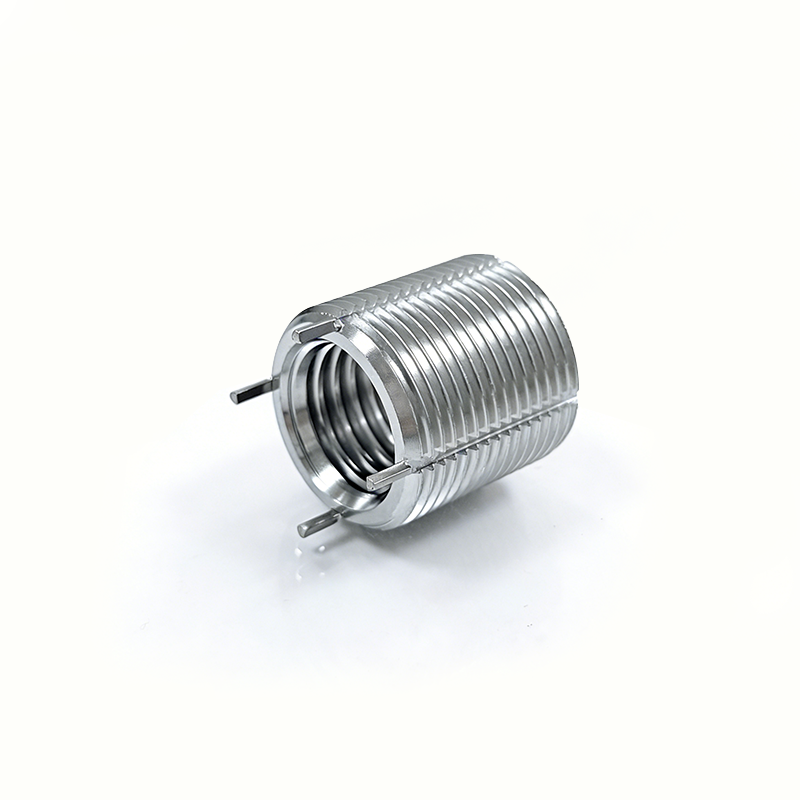
Key locking inserts utilize solid steel construction featuring pre-positioned locking keys that are driven down into the parent material's threads after installation. This mechanical interlock prevents rotation due to vibration or torsion. Built for OEM assembly and heavy-duty MRO operations, these inserts resist torque-out and pull-out forces significantly better than standard wire coil inserts.
-
![Key Locking Thread Inserts]() Key Locking Thread InsertsKeyserts are mechanical locking thread inserts equipped with locking keys that effectively prevent rotation caused by vibration or torsional loads.
-
![Keylocking Thread Repair Insert]() Keylocking Thread Repair InsertKey-Locking Inserts (Keenserts) are high-strength threaded fasteners featuring both internal and external threads. Distinguished by two or four integral locking pins (keys), these inserts provide a
-
![Keyed Threaded Inserts]() Keyed Threaded InsertsKeensert keyed threaded inserts from Nexlok Industrial Co., Ltd. provide durable, high-strength threads for aluminum, steel, and cast iron. Designed to prevent thread stripping, they withstand
-
![Stainless Steel Keenserts]() Stainless Steel KeensertsKEENSERTS key locking inserts provide a reliable solution to prevent thread damage in machinery, precision engineering, and aerospace applications. Manufactured from high-quality stainless steel
-
![Key Locking Thread Repair Inserts]() Key Locking Thread Repair InsertsKey-locking inserts are robust, one-piece locking thread inserts, widely used for repairing damaged threads or as original equipment in certain assemblies. They provide strong mechanical locking to
-
![Key Lock Threaded Inserts]() Key Lock Threaded InsertsKey-locking thread inserts are a proven solution for creating strong, wear-resistant internal threads in soft or lightweight base materials. Designed with solid bush construction and mechanical
-
![Metric Key Locking Inserts]() Metric Key Locking InsertsModel No.: Lightweight, Heavy Duty, Extra Heavy Duty. Rotation Direction: Right Rotation. Certification: ISO 9001:2015, RoHs, REACH. Shape: Two Kees, Four Kees. Precision Grade: 6H
-
![Key Lock Thread Insert]() Key Lock Thread InsertThe commonly used material is SUS303 stainless steel, which offers excellent corrosion resistance, high-temperature resistance, and oxidation resistance. It is suitable for harsh environments such as
-
![Carbon Steel Key Locking Insert]() Carbon Steel Key Locking InsertCarbon steel key-locking thread inserts are manufactured from C1215 carbon steel and treated with a phosphate coating for corrosion protection. Each insert features 2 to 4 pre-assembled locking keys,
-
![Heavy Duty Key Locking Insert]() Heavy Duty Key Locking InsertHeavy duty key locking inserts are solid-body threaded inserts featuring internal and external threads with integrated locking keys.Compared with lightweight versions, the heavy duty series is


Product Type
Thinwall Inserts
Reduced wall thickness for tight space constraints and minimum boss diameters.
Heavy Duty Inserts
Standard wall thickness engineered for maximum load-bearing capacity in structural applications.
Extra Heavy Duty Inserts
Thickest wall profile designed for extreme tensile and shear loads in aerospace and defense equipment.
Internal Locking (Prevailing Torque) Inserts
Features an integrated locking feature on the internal threads to secure bolts against vibration loosening.
Key Features
Positive Mechanical Lock
Two or four pre-assembled locking keys mechanically wedge into the parent material threads to eliminate rotation.
01
High Load Capacity
Distributes bolt clamp load over a larger surface area in soft parent metals.
02
No Special Taps Required
Installs using standard fractional or metric drills and standard taps.
03
Vibration Resistant
Withstands high-frequency cyclic loading and severe thermal shock without backing out.
04
Corrosion Resistant Options
Passivated stainless steel construction withstands harsh chemical and marine environments.
05
Technical Specifications
|
Insert Type |
Internal Thread |
External Thread |
Length Options (mm / inch) |
Standard Material |
Key Count |
|
Thinwall |
M3 to M12 / #4 to 1/2" |
M5 to M16 / #10 to 5/8" |
6mm to 24mm / 0.25" to 1.0" |
303 Stainless Steel |
2 Keys |
|
Heavy Duty |
M4 to M24 / #8 to 1" |
M8 to M33 / 1/4" to 1-3/8" |
8mm to 38mm / 0.31" to 1.5" |
303 / 316 Stainless / 12L14 Steel |
4 Keys |
|
Extra Heavy Duty |
M10 to M30 / 3/8" to 1-1/4" |
M16 to M42 / 5/8" to 1-3/4" |
12mm to 50mm / 0.50" to 2.0" |
Alloy Steel / 316 Stainless |
4 Keys |
Materials & Construction

Carbon Steel
12L14 steel, zinc-plated finish (Clear trivalent chromate, ASTM B633 SC1). High tensile strength for structural steel and cast iron assemblies.

Stainless Steel (303 / UNS S30300)
Standard corrosion-resistant grade. Passivated per ASTM A967 for iron-free surface chemistry.

Stainless Steel (316 / UNS S31600)
Marine-grade austenitic alloy with molybdenum addition for enhanced resistance to chlorides, acids, and saltwater environments.

Coating Options
Cadmium plating (QQ-P-416, Type II), silver plating for high-temperature anti-galling, and dry film lubricants.
How Key Locking Inserts Works / Installation
Drill
Drill out the damaged thread or drill to the specified diameter for new installations using standard drill bits. Countersink the hole 0.010" to 0.030".
Tap
Tap the hole with standard commercial taps to the specified thread size and depth callout.
Install
Thread the insert into the tapped hole using an installation tool until the insert surface sits 0.005" to 0.030" below the parent material surface. The locking keys rest on the surface during this step.
Drive Keys
Strike the installation tool handle firmly with a hammer or press down using an arbor press to drive the locking keys down through the parent material threads, creating a positive mechanical lock.
Typical Applications
Aerospace & Defense
Jet engine gearboxes, avionics housings, helicopter rotor assemblies, and missile guidance chassis.
Automotive & Commercial Vehicles
Engine blocks, transmission housings, turbocharger flanges, and EV battery tray frames.
Industrial Machinery
Hydraulic pumps, industrial robot arm joints, CNC spindle housings, and heavy press tooling.
Electronics & Telecommunications
Radar enclosures, server racks, and heavy-duty transit cases.
Standard Stock & Custom Manufacturing.
Stock Inventory
Over 500 standard inch and metric part numbers maintained in 303 stainless steel and carbon steel for immediate dispatch.
Custom Engineering
Production runs for non-standard thread pitches, extended lengths, specific alloy certifications (Inconel, Monel, Titanium), and specialized plating thicknesses based on engineering drawings.
Manufacturing & Quality Control
-
Machining Centers
CNC Swiss-type lathes and multi-axis turning centers maintain thread pitch diameters within +/-0.012 mm tolerance limits.
-
Thread Inspection
100% optical comparator profile checks and GO/NOGO thread plug gauge verification per ASME B1.1 and ASME B1.3 standards.
-
Mechanical Testing
Lot pull-out and torque-out destructive testing conducted per NAS 1395 specifications on internal load test rigs.
-
Traceability
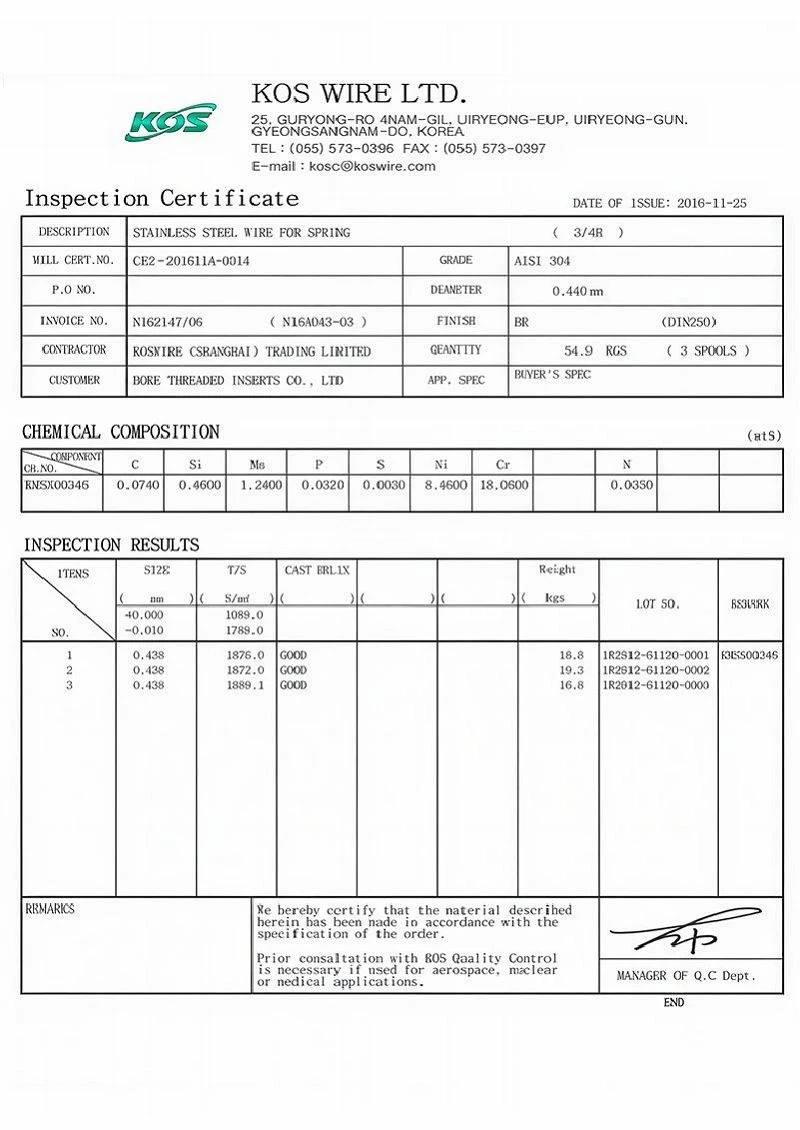
Full material test reports (MTRs) supplied per EN 10204 3.1, maintaining complete heat number tracking from raw bar stock to finished packaging.
How to Select the Right Key Locking Inserts
Determine Base Material Hardness
Select thinwall inserts for high-density aluminum housings where boss wall thickness is limited. Choose heavy-duty profiles for softer magnesium or structural plastics.
Calculate Load Requirements
Match internal thread size to operating bolt tension. Verify shear strength of the parent material against expected pull-out loads.
Identify Environmental Exposure
Specify 303 stainless steel for general indoor equipment, 316 stainless steel for marine or chemical processing exposure, and carbon steel for high-strength steel fabrications.
Confirm Space Constraints
Check outer thread diameter and installation depth to ensure clearance from adjacent structural ribs or internal fluid channels.
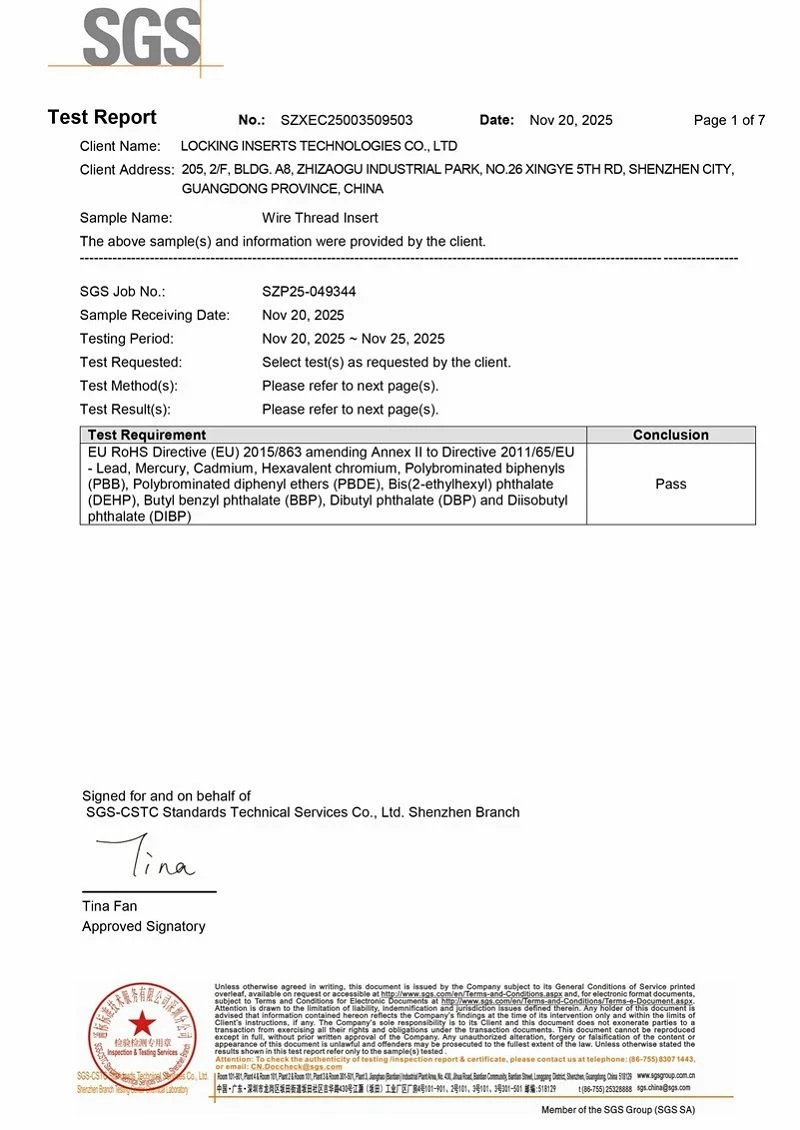
Our Certificate


FAQ
As one of the most professional key locking inserts manufacturers and suppliers in China, we're featured by quality products and good service. Please rest assured to wholesale bulk key locking inserts in stock here from our factory. Also, custom service is available.
Heavy Duty Key Locking Insert, Metric Key Locking Inserts, Keylocking Thread Repair InsertPopular Products


