

Thread Reinforcement for Critical Assemblies
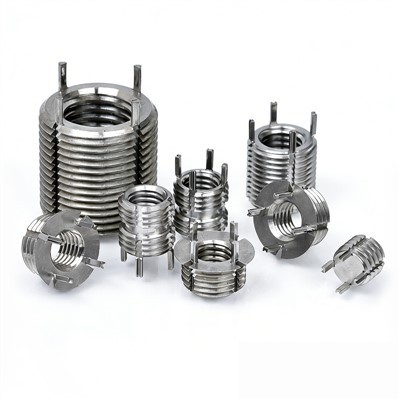
KEENSERTS key locking inserts provide a reliable solution to prevent thread damage in machinery, precision engineering, and aerospace applications. Manufactured from high-quality stainless steel (1.4305 / AISI 303), these inserts offer exceptional durability and can withstand repeated assembly and disassembly cycles without compromising thread integrity.
Our stainless steel KEENSERTS are particularly suited for use in lightweight metals, steel, and cast iron components. In addition to reinforcing weak or worn threads, they serve as an efficient and cost-effective alternative to repairing or replacing damaged threads in high-value parts. From our production experience, KEENSERTS inserts consistently improve long-term assembly reliability and reduce maintenance downtime.
|
Product Type |
Thin Wall / Heavy Duty / Solid |
Locking Torque |
15N·m(AS7482standard) |
|
Material |
AISI 303 Stainless Steel |
Temperature Resistance |
-196℃~+538℃ |
|
Thread Size |
Metric Thread Sizes: M2 to M24 |
MOQ |
100 PCS Standard |
|
10-32 to 1"-8, UNC / UNF |
Country of Origin |
China |
|
|
Tensile Strength |
≥650MPa |
Port of Shipment |
Shenzhen Port |
|
Industrial Standard |
MIL-I-45930A, ISO 9001:2015 |
Surface Treatment |
Natural Finish (Passivated) |
|
Environmental Standard |
RoHs,REACH |
Packaging |
Boxed / PVC Bag Packaging |
Why Stainless Steel?
Enhanced Machining Efficiency
Sulfide inclusions improve chip control, enabling up to 25% higher thread rolling and tapping speeds (Boeing D6-17487), ideal for high-volume production of Keensert® inserts with complex internal threads.
Dimensional Accuracy
A low work-hardening rate (n ≈ 0.45 vs. 0.55 for 304) maintains thread profile tolerances within ±0.01 mm, compliant with ASME B1.1 Class 3B.
Cost-Performance Advantage
Raw material costs are 18–22% lower than 316 stainless steel, delivering optimal value in non-severe corrosive environments.

Keensert-Specific Standards
● MS33537 (U.S. Military Standard) / NASM33537 (National Aerospace Standard)
● These standards define material eligibility for key-locking thread inserts.
● AISI 303 stainless steel is restricted to Class 1 applications, intended for general industrial environments.
● Class 2 and Class 3 applications, covering severe service conditions and aerospace use-require higher-performance materials such as AISI 316 or 17-4 PH stainless steel, due to their superior corrosion resistance and mechanical strength.

Coating and Surface Treatment Requirements
To offset the inherent corrosion resistance limitations of AISI 303 stainless steel, approved surface treatments include:
Cadmium plating in accordance with QQ-P-416, or Chromium-free Dacromet coating per ASTM D7695.
These coatings are specified to enhance corrosion protection and ensure long-term performance in demanding service environments.
Base Material Specifications
ASTM A582 / A582M
Specification for free-machining stainless steel bars, covering chemical composition, mechanical properties, and dimensional tolerances for production use.
AMS 5640
Aerospace-grade AISI 303 stainless steel bar. This standard imposes tighter controls on material cleanliness and consistency, including a maximum oxygen content of O₂ ≤ 0.015%, to ensure stable machining performance and structural reliability in aerospace applications.
Stainless Steel Keenserts Structure

Self-Locking Key-Locking Thread Inserts (Self-Locking Keensert)
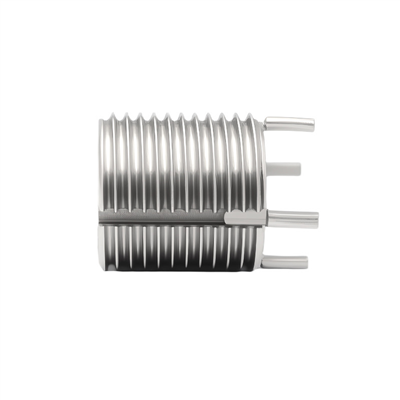
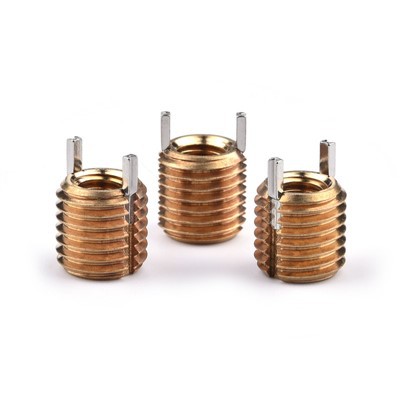
Self-locking inserts share the same basic construction as standard key-locking inserts: a solid insert body, typically manufactured from AISI 303 / EN 1.4305 stainless steel, with matched external and internal threads. The difference is the addition of a dedicated self-locking feature within the internal thread section, such as a controlled thread deformation or pre-installed locking keys.
During installation, the keys are driven into the parent material's thread flanks, creating a positive mechanical interlock. This significantly improves resistance to loosening and back-out under vibration or cyclic loading, making self-locking inserts suitable for dynamic and safety-critical applications.
Standard material configuration is an AISI 303 insert body with AISI 302 stainless steel locking keys. Inserts may be supplied with dry-film lubrication or a specified lubrication condition in accordance with industrial requirements.
Lightweight / Thin-Wall Key-Locking Thread Inserts (Lightweight / Thin-Wall Keensert)
Lightweight or thin-wall inserts feature a reduced outer diameter and wall thickness for use in space-limited designs or thin parent materials. The structure remains a solid insert with internal and external threads, but the smaller outside diameter and reduced external thread engagement result in lower pull-out and shear strength compared with heavy-duty designs.
These inserts are intended for applications with moderate load requirements where space savings or minimal material removal are priorities. Typical size ranges cover M2 to M12 (metric) and are commonly used in compact or precision assemblies.
Application Recommendation
Self-locking inserts are recommended for joints subject to vibration, repeated assembly, or safety-critical service, such as aerospace components, pump housings, and powertrain applications. Lightweight or thin-wall inserts are suitable where space is limited, parent material thickness is low, and load or service frequency requirements are relatively modest.
Lightweight Stainless Steel Keenserts Data Sheet
|
Part Number |
Part Number |
Internal Thread |
External Thread |
Length |
Drill Bit Size |
Tap Hole Depth |
|
KNCM2×0.4 |
KNCML2×0.4 |
M2×0.4 |
M4×0.7 |
3.00 |
3.40 |
4.0 |
|
KNCM2.5×0.45 |
KNCML2.5×0.45 |
M2.5×0.45 |
M4.5×0.75 |
3.81 |
3.90 |
5.0 |
|
KNCM3×0.5 |
KNCML3×0.5 |
M3×0.5 |
M3×0.8 |
4.25 |
4.40 |
5.5 |
|
KNCM4×0.7 |
KNCML4×0.7 |
M4×0.7 |
M6×0.75 |
5.25 |
5.50 |
6.5 |
|
KNCM5×0.8 |
KNCML5×0.8 |
M5×0.8 |
M8×1.25 |
8.00 |
6.90 |
9.5 |
|
KNCM5×0.5 |
KNCML5×0.5 |
M5×0.5 |
M8×1.25 |
8.00 |
6.90 |
9.5 |
|
KNCM6×1.0 |
KNCML6×1.0 |
M6×1.0 |
M10×1.25 |
10.00 |
8.80 |
11.5 |
|
KNCM6×0.75 |
KNCML6×0.75 |
M6×0.75 |
M10×1.25 |
10.00 |
8.80 |
11.5 |
|
KNCM8×1.25 |
KNCML8×1.25 |
M8×1.25 |
M12×1.25 |
12.00 |
10.80 |
13.5 |
|
KNCM8×1.0 |
KNCML8×1.0 |
M8×1.0 |
M12×1.25 |
12.00 |
10.80 |
13.5 |
|
KNCM10×1.5 |
KNCML10×1.5 |
M10×1.5 |
M14×1.5 |
14.00 |
12.80 |
15.5 |
|
KNCM10×1.25 |
KNCML10×1.25 |
M10×1.25 |
M14×1.5 |
14.00 |
12.80 |
15.5 |
|
KNCM12×1.75 |
KNCML12×1.75 |
M12×1.75 |
M16×1.5 |
16.00 |
14.75 |
17.5 |
|
KNCM12×1.25 |
KNCML12×1.25 |
M12×1.25 |
M16×1.5 |
16.00 |
14.75 |
17.5 |
FAQ
1. Q: What are the main advantages of stainless steel Keenserts in corrosive environments?
A: Stainless steel Keenserts, commonly produced from 300-series stainless steels or 17-4 PH, provide strong resistance to corrosion from moisture, chemicals, and salt exposure. Compared with carbon steel inserts, they offer significantly longer service life in marine, chemical, and food-processing applications. The integrated mechanical locking keys prevent loosening without the need for coatings, reducing maintenance and rework over time.
2. Q: What installation practices are critical to ensure reliable performance?
A: Installation requires controlled drilling (typical hole tolerance ±0.05 mm), correct tapping of the parent material, and pressing the insert in with a dedicated tool at the recommended torque (for example, 15–20 Nm for M6). Due to the hardness of stainless steel, light lubrication is recommended to minimize friction and heat. Over-torqueing should be avoided, as improper installation is the primary cause of early insert failure.
3. Q: Which parent materials are suitable for stainless steel Keenserts?
A: Stainless steel Keenserts are well suited for softer materials such as aluminum alloys (e.g. 6061-T6), magnesium alloys, engineering plastics, and composite laminates. In these materials, the mechanical locking design typically provides two to three times the pull-out strength of a standard tapped thread, while maintaining stability under vibration and thermal cycling. Brittle materials may require additional evaluation.
4. Q: How does the self-locking design improve performance compared with standard inserts?
A: The key-locking structure creates a positive mechanical lock between the insert and the parent material. In vibration testing, this design shows a substantially lower risk of loosening than conventional thread inserts. Torque retention remains stable across a wide temperature range (approximately –50 °C to 300 °C), making it suitable for high-vibration applications such as aerospace and electric vehicle assemblies.
5. Q: How is corrosion resistance verified, and which standards are met?
A: Stainless steel Keenserts manufactured from grades such as 316L are qualified through ASTM B117 salt spray testing, typically exceeding 1,000 hours without red rust. They comply with ISO 3506-1 mechanical property classes and meet RoHS and REACH requirements. In chloride-rich environments, 316L offers higher reliability than 304, and material selection should be based on actual service conditions.
Hot Tags: stainless steel keenserts, China stainless steel keenserts manufacturers, suppliers, factory, Key Locking Thread Repair Inserts, Keylocking Thread Repair Insert, Carbon Steel Key Locking Insert, Metric Key Locking Inserts, key locking inserts, Key Lock Threaded Inserts