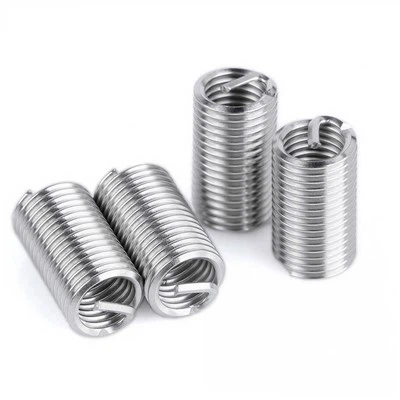


Product Informations
|
Product Name |
M10 Wire Thread Insert |
|
Brand Name |
Nexlok Industrial |
|
Material |
SUS304, SUS316, Inconel-X 750, Brass, Customized |
|
Surface Treatment |
Stainless steel surface |
|
Model No. |
Metric M10*1d/1.5d/2d/2.5d/3d |
|
Standard Type |
MS21209/Din8140/Other |
|
Threaded Size |
Metric,Inc UNC, UNF |
|
Length |
1D-3D/Customized |
|
Certification |
IS0 9001:2015, SGS, RoHs |
|
Function |
Thread connection,Fastening and assmble |
|
Reliability |
Mechanical dimentions, hardness test, saltspray endurance test |
|
Range of Application |
Electronic computers, plastic products, cabinet, Sheet metal, Mold |
|
Delivery Time |
1-15days, According to quantity and product specification |
Insert Types: Free-Running vs Screw-Lock
When discussing "how many times a heli-coil can be used", the type of the heli-coil is one of the important factors determining its repeatable service life. Common heli-coils are classified by function into two types: Free-Running and Screw-Lock. They differ significantly in their cyclic disassembly and assembly performance as well as their applicable scenarios.

Free-Running
Structural Feature: The internal thread size is compatible with standard bolts, without additional locking resistance.
Service Life: Under correct torque, appropriate lubrication, and proper installation conditions, the free-insertion type Helicoil can typically withstand several tens to hundreds of bolt cycle disassembly and reassembly, while maintaining stable thread accuracy and preload force.

Screw-Lock
Structural features: A compression zone is formed atthe end of the coil, applying additional radial clampingforce to the bolt to achieve mechanical lockingfunctionality.
Service life: The anti-vibration effect of the self-locking type is superior to that of the free insertion type. However,due to the gradual attenuation of the self-locking torque over multiple cycles, its effective service life is typically inthe range of single-digit to low double-digit cycles. When the self-locking torque drops below the design value, itis considered as failure and replacement is required.

Ready to Make Your Repair Permanent

If you are looking for a reliable, cost-effective and industry-proven solution for thread repair, Wire thread insert is the best choice. It not only restores the original strength but also achieves higher durability in most applications. Whether you are a professional in automotive repair, industrial maintenance, or mechanical processing, choosing high-quality Wire thread insert means reducing downtime, lowering costs, and ensuring long-term reliable performance.
Contact us immediately to obtain the original Wire thread insert products and professional technical support, ensuring that every repair becomes a long-term solution.
Specifications for Small-Diameter Wire Thread Inserts

|
Nominal Diameter |
Pitch |
Nominal Length xD L |
Coil (W) |
Free-State OD(D) |
Drill Bit Diameter(do) |
Drilling Depth(L3) |
Actual Effective Length (L2) |
|
|
M2 |
0.4 |
1D |
2.0 |
2.9 |
2.60~2.80 |
2.1 |
3.6 |
1.6 |
|
1.5D |
3.0 |
4.9 |
4.6 |
2.6 |
||||
|
2D |
4.0 |
6.9 |
5.6 |
3.6 |
||||
|
2.5D |
5.0 |
8.9 |
6.6 |
4.6 |
||||
|
3D |
6.0 |
10.9 |
7.6 |
5.6 |
||||
|
M2.5 |
0.45 |
1D |
2.5 |
3.5 |
3.30~3.50 |
2.6 |
4.3 |
2.1 |
|
1.5D |
3.8 |
5.9 |
5.6 |
3.3 |
||||
|
2D |
5.0 |
8.1 |
6.8 |
4.6 |
||||
|
2.5D |
6.3 |
10.5 |
8.1 |
5.8 |
||||
|
3D |
7.5 |
12.9 |
9.3 |
7.0 |
||||
|
M3 |
0.5 |
1D |
3.0 |
3.9 |
3.80~4.00 |
3.1 |
5.0 |
2.5 |
|
1.5D |
4.5 |
6.3 |
6.5 |
4.0 |
||||
|
2D |
6.0 |
8.7 |
8.0 |
5.5 |
||||
|
2.5D |
7.5 |
11.1 |
9.5 |
7.0 |
||||
|
3D |
9.0 |
13.5 |
11.0 |
8.5 |
||||
|
M3.5 |
0.6 |
1D |
3.5 |
3.7 |
4.42~4.60 |
3.7 |
5.9 |
2.9 |
|
1.5D |
5.3 |
6.3 |
7.65 |
4.8 |
||||
|
2D |
7.0 |
8.7 |
9.4 |
6.4 |
||||
|
2.5D |
8.8 |
11.2 |
11.15 |
8.2 |
||||
|
3D |
10.5 |
13.3 |
12.9 |
9.9 |
||||
|
M4 |
0.7 |
1D |
4.0 |
3.7 |
5.05~5.25 |
4.2 |
6.8 |
3.3 |
|
1.5D |
6.0 |
6.1 |
8.8 |
5.3 |
||||
|
2D |
8.0 |
8.4 |
10.8 |
7.3 |
||||
|
2.5D |
10.0 |
10.9 |
12.8 |
9.3 |
||||
|
3D |
12.0 |
13.2 |
14.8 |
11.3 |
||||
|
M5 |
0.8 |
1D |
5.0 |
4.3 |
6.35~6.60 |
5.2 |
8.2 |
4.2 |
|
1.5D |
7.5 |
6.9 |
10.7 |
6.7 |
||||
|
2D |
10.0 |
9.7 |
13.2 |
9.2 |
||||
|
2.5D |
12.5 |
12.3 |
15.7 |
11.7 |
||||
|
3D |
15.0 |
14.8 |
18.2 |
14.2 |
||||
|
M6 |
1 |
1D |
6.0 |
4.2 |
7.60~7.85 |
6.3 |
10.0 |
5.0 |
|
1.5D |
9.0 |
6.9 |
13.0 |
8.0 |
||||
|
2D |
12.0 |
9.6 |
16.0 |
11.0 |
||||
|
2.5D |
15.0 |
12.3 |
19.0 |
14.0 |
||||
|
3D |
18.0 |
14.6 |
22.0 |
17.0 |
||||
|
M7 |
1 |
1D |
7.0 |
5.3 |
8.65~8.90 |
7.3 |
11.0 |
6.0 |
|
1.5D |
10.5 |
8.2 |
14.5 |
9.5 |
||||
|
2D |
14.0 |
11.1 |
18.0 |
13.0 |
||||
|
2.5D |
17.5 |
14.3 |
21.5 |
16.5 |
||||
|
3D |
21.0 |
17.4 |
25.5 |
20.5 |
||||
|
M8 |
1.25 |
1D |
8.0 |
4.7 |
9.85~10.10 |
8.3 |
13.0 |
6.8 |
|
1.5D |
12.0 |
7.4 |
17.0 |
10.8 |
||||
|
2D |
16.0 |
10.6 |
21.0 |
14.8 |
||||
|
2.5D |
20.0 |
13.5 |
25.0 |
18.8 |
||||
|
3D |
24.0 |
16.4 |
29.0 |
22.8 |
||||
|
M8 |
1 |
1D |
8.0 |
6.1 |
9.85~10.10 |
8.3 |
12.0 |
7.0 |
|
1.5D |
12.0 |
9.5 |
16.0 |
11.0 |
||||
|
2D |
16.0 |
12.9 |
20.0 |
15.0 |
||||
|
2.5D |
20.0 |
16.5 |
24.0 |
19.0 |
||||
|
3D |
24.0 |
19.9 |
28.0 |
23.0 |
||||
|
M9 |
1.25 |
1D |
9.0 |
5.3 |
10.85~11.1 |
9.4 |
14.0 |
7.8 |
|
1.5D |
13.5 |
8.6 |
18.5 |
12.3 |
||||
|
2D |
18.0 |
11.9 |
23.0 |
16.8 |
||||
|
2.5D |
22.5 |
15.3 |
27.5 |
21.3 |
||||
|
3D |
27.0 |
18.1 |
32.0 |
25.8 |
||||
|
M10 |
1.5 |
1D |
10.0 |
5.0 |
12.10~12.50 |
10.4 |
16.0 |
8.5 |
|
1.5D |
15.0 |
8.1 |
21.0 |
13.5 |
||||
|
2D |
20.0 |
11.2 |
26.0 |
18.5 |
||||
|
2.5D |
25.0 |
14.2 |
31.0 |
23.5 |
||||
|
3D |
30.0 |
17.2 |
36.0 |
28.5 |
||||
|
M10 |
1.25 |
1D |
10.0 |
6.0 |
12.10~12.50 |
10.3 |
15.0 |
8.8 |
|
1.5D |
15.0 |
9.7 |
20.0 |
13.8 |
||||
|
2D |
20.0 |
13.1 |
25.0 |
18.8 |
||||
|
2.5D |
25.0 |
16.9 |
30.0 |
23.8 |
||||
|
3D |
30.0 |
20.1 |
35.0 |
28.8 |
||||
|
M10 |
1 |
1D |
10.0 |
7.6 |
12.10~12.50 |
10.3 |
14.0 |
9.0 |
|
1.5D |
15.0 |
12.1 |
19.0 |
14.0 |
||||
|
2D |
20.0 |
16.3 |
24.0 |
19.0 |
||||
|
2.5D |
25.0 |
20.7 |
29.0 |
24.0 |
||||
|
3D |
30.0 |
25.0 |
34.0 |
29.0 |
||||
Wire Thread Insert Installation Steps


Required Tools for Installation
Installing the Helicoil Insert requires a set of professional tools, including:
● Tap: This is used to machine the appropriate thread size within the hole to ensure that the protective sleeve can be smoothly inserted and tightened.
● Installation Tool: This is used to accurately insert the threaded sleeve into the pre-processed threaded hole.
● Tang Break-off Tool: After installation, this is used to break off the positioning rod at the inner end of the sleeve to ensure that it does not affect the threaded connection.
Furthermore, to ensure the installation quality, it is recommended to use a torque wrench to pre-tighten the threaded holes and fasteners to prevent secondary damage caused by insufficient or excessive torque.
Industries & Scenarios of Helicoil Insert
● Aerospace
Improves thread strength and reliability under extreme temperature and vibration.
● Automotive
Reinforces aluminum threads for higher load capacity and durability.
● Electronics
Maintains precise, wear-resistant threads through repeated assembly.
● Industrial Machinery
Enhances thread stability and extends equipment service life.

FAQ
Q: Will repeated screw removal cause the insert to unwind or back out?
A: No. Once installed, the insert is radially expanded and mechanically locked into the tapped hole. Normal screw removal does not cause the insert to rotate or disengage.
Q: How critical is the tapped hole quality for insert performance?
A: Very critical. Insert performance depends heavily on correct STI tap size, thread class, hole straightness, and surface finish. Most performance issues are caused by improper hole preparation rather than the insert itself.
Q: Can wire threaded inserts be installed in blind holes?
A: Yes. Wire threaded inserts are suitable for blind holes, provided that adequate depth is allowed for insertion and tang break-off. Tangless inserts are also available for applications where tang removal is not possible.
Q: How does temperature cycling affect wire threaded inserts?
A: Wire threaded inserts tolerate thermal cycling well.
Their elastic nature helps accommodate differences in thermal expansion between the insert and base material, reducing the risk of thread loosening or damage.
Q: Do wire threaded inserts require periodic inspection or maintenance?
A: No. Once installed, wire threaded inserts are considered maintenance-free under normal service conditions.
Q: Why do some applications specify wire threaded inserts by default rather than as a repair solution?
A: Because they offer predictable, repeatable thread performance in soft materials, many engineers specify inserts at the design stage to prevent future thread failure and reduce lifecycle costs.
Hot Tags: threaded inserts m10, China threaded inserts m10 manufacturers, suppliers, factory, Thread Repair Inserts, Threaded Inserts M10, Helical Wire Insert, Free Running Coil Insert, Threaded Screw Inserts, wire thread inserts