

Nexlok Industrial – Trusted Locking Solutions
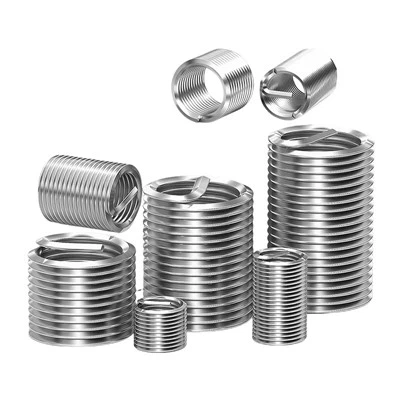
Nexlok Industrial manufactures screw-locking Helical Thread Inserts (locking helicoils) to create strong, durable threads in metals, plastics, and composites.
With integrated locking, our inserts prevent screws and bolts from loosening under vibration or shock, ensuring reliable, long-lasting connections.
Product Structure

Our self-locking helical wire inserts provide secure, vibration-resistant connections for critical mechanical applications. Engineered for reliability, they ensure bolts remain firmly engaged even under dynamic loads.
How It Works
The insert features a dual-thread design:
- Internal thread: Anchors in the bolt hole.
- External thread: Engages the bolt, preventing rotation.
- Small protrusions create friction with the base material, enhancing stability and preventing loosening.
Benefits
- Maintains secure connections under vibration
- High tensile and shear strength
- Prevents bolt loosening or detachment
- Long-lasting performance in harsh environments
Product Information
|
For Use In |
Metal |
|
Threaded Insert Type |
Helical |
|
Helical Insert Style |
With Prong |
|
Material |
Stainless Steel 304, AISI 304 |
|
Passivation |
Not Passivated |
|
Color |
Red |
|
System of Measurement |
Inch |
|
Thread Direction |
Right Hand |
|
Thread Type |
UNF |
|
Thread Spacing |
Fine |
|
For Tap Type |
Helical |
|
End Type |
Open |
|
Internal Locking Type |
Distorted Thread |
|
Tensile Strength |
200,000 psi |
|
RoHS |
RoHS 3 (2015/863/EU) Compliant |
|
Country of Origin |
Shenzhen, China |

UNF Wire Thread Insert Technical Data

|
Nominal Diameter |
Pitch |
Nominal xD |
Length |
Coil (W) |
Free-State OD(Dz) |
Drill Bit Diameter(do) |
Drilling Depth(L3) |
Actual Effective Length (L2) |
|
4-48 |
0.529 |
1d |
2.8 |
3.4 |
3.7~4.1 |
3.0 |
4.9 |
2.5 |
|
1.5d |
4.3 |
5.6 |
6.4 |
4.0 |
||||
|
2d |
5.7 |
7.9 |
7.8 |
5.4 |
||||
|
2.5d |
7.1 |
10.3 |
9.2 |
6.7 |
||||
|
6-40 |
0.635 |
1d |
3.5 |
3.6 |
4.5~4.9 |
3.8 |
6.0 |
3.1 |
|
1.5d |
5.3 |
6.0 |
7.8 |
4.9 |
||||
|
2d |
7.0 |
8.4 |
9.5 |
6.6 |
||||
|
2.5d |
8.8 |
10.8 |
11.3 |
8.4 |
||||
|
8-36 |
0.706 |
1d |
4.2 |
4.0 |
5.3~5.7 |
4.4 |
7.0 |
3.8 |
|
1.5d |
6.3 |
6.6 |
9.1 |
5.9 |
||||
|
2d |
8.3 |
9.1 |
11.1 |
7.9 |
||||
|
2.5d |
10.5 |
11.7 |
13.3 |
10.1 |
||||
|
10-32 |
0.794 |
1d |
4.8 |
4.1 |
6.1~6.5 |
5.1 |
8.0 |
4.4 |
|
1.5d |
7.2 |
6.8 |
10.4 |
6.8 |
||||
|
2d |
9.6 |
9.5 |
12.8 |
9.2 |
||||
|
2.5d |
12.1 |
12.1 |
15.3 |
11.7 |
||||
|
1/4''-28 |
0.907 |
1d |
6.4 |
5.0 |
7.8~8.3 |
6.7 |
10.0 |
5.9 |
|
1.5d |
9.5 |
8.1 |
13.1 |
9.0 |
||||
|
2d |
12.7 |
11.3 |
16.3 |
12.2 |
||||
|
2.5d |
15.9 |
14.4 |
19.5 |
15.4 |
||||
|
5/16''-24 |
1.058 |
1d |
7.9 |
5.5 |
9.7~10.2 |
8.2 |
12.1 |
7.4 |
|
1.5d |
11.9 |
8.9 |
16.1 |
11.4 |
||||
|
2d |
15.9 |
12.2 |
20.1 |
15.4 |
||||
|
2.5d |
19.8 |
15.6 |
24.0 |
19.3 |
||||
|
3/8''-24 |
1.058 |
1d |
9.5 |
6.9 |
11.4~11.9 |
9.8 |
13.7 |
9.0 |
|
1.5d |
14.3 |
10.9 |
18.5 |
13.8 |
||||
|
2d |
19.1 |
14.9 |
23.3 |
18.6 |
||||
|
2.5d |
23.8 |
19.0 |
28.0 |
23.3 |
||||
|
7/16''-20 |
1.27 |
1d |
11.1 |
6.6 |
13.4~13.9 |
11.5 |
16.2 |
10.5 |
|
1.5d |
16.7 |
10.6 |
21.8 |
16.1 |
||||
|
2d |
22.2 |
14.5 |
27.3 |
21.6 |
||||
|
2.5d |
27.8 |
18.4 |
32.9 |
27.2 |
Industry Applications of Self-Locking Helical Thread Inserts
Automotive Engine Components
Industry: Automotive Manufacturing
Base Material: Aluminum engine block
Fastener Size: M8–M12
Application Parts: Engine mounts, transmission housings
Customer Challenge
In mass production, aluminum threads showed:
- Thread wear after repeated tightening
- Bolt back-out under engine vibration
- High rework cost during assembly


Our Solution
We provided screw-locking wire thread inserts designed for high-cycle assembly. Compared with free-running inserts, the locking type adds controlled prevailing torque without damaging the bolt.
Result
- Eliminated bolt loosening in endurance tests
- Improved thread durability in soft aluminum
- Reduced assembly defects and warranty risk
The customer now specifies locking inserts instead of free-running inserts for vibration-critical positions.
Industrial Machinery
Industry: Industrial Machinery
Base Material: Aluminum housings
Thread Size: M5–M10
Application Parts: Pumps, compressors, gearboxes
Customer Challenge
In oil-rich environments:
- Chemical threadlockers became ineffective
- Threads required frequent repair
- Downtime increased maintenance costs


Our Solution
We recommended mechanical screw-locking wire thread inserts instead of adhesives.
Result
- Consistent locking performance despite oil exposure
- Multiple reuse cycles without thread damage
- Improved equipment uptime
This solution is now widely used in the customer's rotating equipment lines.
Packaging & Shipping

The lead time takes about 1-7 working days, and the transport time is estimated according to different regions. 1). By Express (3-5 working days), suitable for Urgent Time and Small Quantity. 2). By Sea (15-30 days), suitable for regular Mass Production. 3). By Air (5-7 days), from Airport to Airport. Tell us your requirement about the Shipping by clicking here, so that we can provide solution to save your budget and meet your need!
FAQ
1.Why is the torque too high or screws breaking when using locking inserts?
Answer: In 99.9% of cases, the issue is caused by the tapped hole or screw, not the insert itself. Please ensure:
● The hole is drilled, countersunk, and tapped correctly, and passes a GO thread plug gage.
● Thread cutting taps are used, not thread forming taps.
● The insert is not installed in the chamfered thread at the bottom of a blind hole.
● Screw material and hardness are suitable; avoid using overly soft screws such as 300 series stainless steel.
2.Why do screws gall or seize in locking inserts?
Answer: Galling usually occurs when the screw and insert are made of similar materials, causing excessive friction. Common causes include:
● Using soft screws (e.g., 300 series stainless steel).
● Lack of plating or lubricant on the screw or insert.
Solutions:
● Avoid 300 series stainless steel screws; use A286 aircraft quality or equivalent.
● If stainless screws are required, apply anti-seize lubricant (e.g., molybdenum disulfide) or use cadmium-plated/dry-film-lubricated screws.
● Lubricating the screw is more effective than only lubricating the insert.
3. Why does the insert spin with the screw?
Answer: This is usually caused by improperly prepared holes:
● Hole dimensions, minor diameter, or thread specifications are out of tolerance.
● The insert is installed at the bottom chamfer of a blind hole or blocked by excess primer or coating.
● Thread locking compounds are used, which prevent proper insert expansion.
4. What type of screw ensures optimal performance of locking inserts?
Answer: ● Screw hardness should be close to the insert hardness (insert Rc 43–50; recommended screw Rc 36–42).
● Screw surface should be plated (e.g., cadmium) or coated with dry-film/anti-seize lubricant to reduce friction and galling.
● Avoid unplated, untreated soft screws.
5.How can the service life of locking inserts be maximized?
Answer: ● Use heat-treated screws with hardness matching the insert.
● Apply anti-seize lubricant on screws or choose plated/dry-film-lubricated screws.
● Avoid excessive chemical thread lockers or primer in the hole.
● Follow proper drilling, tapping, and installation procedures.
Hot Tags: helical thread inserts, China helical thread inserts manufacturers, suppliers, factory, Thread Repair Inserts, Threaded Inserts M10, Helical Wire Insert, Free Running Coil Insert, Threaded Screw Inserts, wire thread inserts